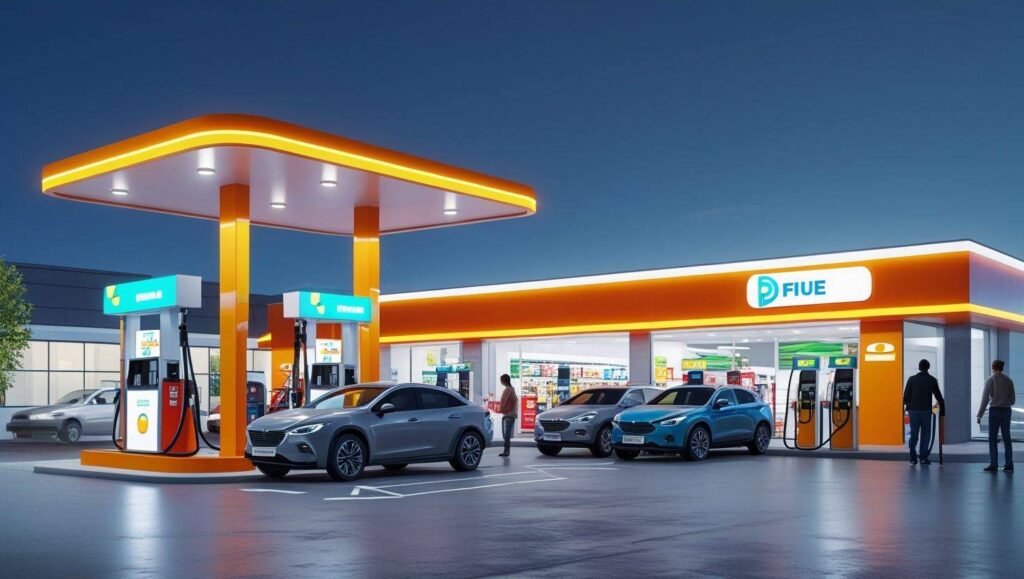

The retail world is changing faster than ever. From supermarkets to online giants, companies are diversifying their strategies to stay profitable and relevant. One of the most surprising and strategic shifts is retailers entering fuel business—a move that blends convenience, loyalty building, and smart economics. This trend is reshaping how consumers shop, fill up their tanks, and interact with their favorite brands. Whether it’s supermarket chains, convenience-store franchises, or even e-commerce players, fuel retailing has become a powerful new frontier.
Why Retailers Are Expanding Into Fuel Stations
Retailers aren’t entering the fuel market by accident. This shift is a calculated response to evolving customer behavior, fierce competition, and the need for diversified revenue streams.
1. Fuel Stops Bring Guaranteed Foot Traffic
Whether the economy is booming or slowing down, people need fuel. This predictable, daily demand gives retailers a stable and steady flow of customers. When a fuel station is physically attached to a store, it encourages drivers to step inside for groceries, snacks, or other essentials. That cross-shopping effect boosts overall revenue.
Key benefits:
- Higher number of daily visitors
- More impulse purchases
- Increased visibility and brand presence
2. Combining Convenience With Necessity
Retailers know that modern consumers love one-stop solutions. By offering both fuel and retail products in one location, companies enhance customer convenience and win loyalty effortlessly. Think about how common it is now to fill your tank and grab a coffee, pay bills, or purchase last-minute groceries—all under one roof.
How This Trend Began: A Look at Industry Evolution
Retail companies have experimented with fuel retailing for decades, but the trend has skyrocketed in the last 10–15 years.
The Role of Big-Box Stores
Supermarket giants and hypermarkets were among the first to see the advantage of pairing fuel with retail. They realized that:
- Fuel discounts attract price-sensitive shoppers
- Loyalty programs create long-term retention
- Additional product sales offset competitive fuel pricing
This model proved so successful that it spread globally.
Convenience Stores Took It Even Further
Brands like 7-Eleven, Circle K, and regional chains expanded aggressively into the fuel space, turning their stores into mini convenience hubs. They focused on:
- Quick snacks
- Fresh food
- Beverage stations
- Ready-made meals
- ATM and bill payment services
Fuel created the foot traffic, while the store generated profit.
What Makes the Fuel Business Attractive for Retailers?
Even though fuel margins are often thin, the business still offers several strategic advantages.
1. Cross-Selling Potential
Fuel customers often buy:
- Snacks
- Drinks
- Tobacco products
- Groceries
- Car accessories (oil, wipers, cleaning supplies)
These high-margin items significantly boost total revenue.
2. Loyalty Program Integration
Fuel stations offer a unique touchpoint to strengthen customer loyalty. Retailers use:
- Fuel points
- Digital wallets
- Membership discounts
- App-only promotions
This turns occasional shoppers into regular ones.
3. Real Estate Optimization
Many retailers already own land with high traffic exposure. Adding fueling pumps is a smart way to:
- Maximize land value
- Increase store occupancy
- Utilize parking space efficiently
This expansion doesn’t always require new property acquisitions.
4. Competitive Differentiation
In saturated retail markets, standing out is difficult. Offering fuel services gives brands:
- A unique selling point
- A reason for customers to choose them over competitors
- More opportunities to engage with shoppers
Examples of Retailers Succeeding in the Fuel Market
To understand the potential, let’s look at real-world examples of retail brands that have successfully integrated fuel into their business models (generic examples, since this article is geography-neutral).
1. Supermarket Fuel Stations
Large grocery chains now combine fuel stations with retail stores. They offer:
- Loyalty points per gallon
- Fuel discounts tied to grocery spending
- Seasonal promotions
Shoppers appreciate saving money on both groceries and fuel in one place.
2. Convenience-Store Fuel Brands
Convenience store operators often rely on fuel pumps to attract fast-moving customers. Their model focuses on:
- Quick service
- High product turnover
- Fast food counters
This combination makes fuel stations more profitable than standalone convenience stores.
3. Retailers Partnering With Oil Companies
Some retailers avoid the complexity of running fuel operations by partnering with established oil brands. In these partnerships:
- Oil companies handle pump operations
- Retailers manage the store and customer experience
This arrangement reduces risk and capital investment while still bringing in customers.
Challenges Faced by Retailers Entering the Fuel Sector
While the fuel business is lucrative, it’s not without challenges. Understanding potential difficulties helps retailers plan better.
1. High Startup Costs
Fuel pumps, underground tanks, safety requirements, and environmental compliance require heavy investment. Retailers need:
- Technical expertise
- Safety certifications
- Maintenance teams
- Government approvals
2. Thin Margins on Fuel
Fuel often has low profit margins, especially when prices fluctuate. That’s why retailers rely on store sales to balance profitability.
3. Regulatory Compliance
Fuel retailing is tightly regulated. Retailers must follow:
- Safety protocols
- Fire regulations
- Environmental standards
- Fuel-quality testing
This adds to operational complexity.
4. Market Competition
Fuel stations compete fiercely on price. Retailers must use:
- Loyalty rewards
- In-store deals
- Bundled promotions
to attract consistent traffic.
How Retailers Can Win in the Fuel Market
For retailers joining this business, success depends on strategic planning and customer-centric design.
1. Focus on Convenience
Consumers want efficiency. To deliver, retailers should:
- Offer quick payment options
- Use contactless fuel pumps
- Provide fast checkout lines
- Keep stores open 24/7 (if possible)
Easy experiences create repeat customers.
2. Modernize Through Technology
Digital innovation is transforming fuel retailing. Top strategies include:
- Mobile apps for payments
- Digital receipts
- Real-time fuel price updates
- Loyalty integration
- Smart inventory systems
Technology increases convenience and operational efficiency.
3. Add Value Through Food & Beverage
Food service is one of the most profitable aspects of connected fuel stations. Retailers should offer:
- Fresh bakery items
- Hot meals
- Premium coffee
- Grab-and-go snacks
Great food keeps customers coming back even when they don’t need fuel.
4. Provide Unique In-Store Services
Some winning services include:
- Car wash facilities
- Parcel pickup
- Money transfers
- Utility bill payments
These extras encourage customers to choose one location over another.
5. Sustainable Fuel Options
The future of fuel includes:
- EV charging stations
- Biofuel alternatives
- Hybrid service hubs
- Solar-powered operations
Retailers adopting eco-friendly fuel solutions attract new customer segments and prepare for long-term market shifts.
Future Trends: How the Market Will Evolve
The move of retailers entering fuel business is only the beginning. The future will bring innovative changes.
1. EV Charging Integrated with Retail
Electric vehicles are growing globally. Retailers will add:
- Fast chargers
- Pay-per-charge memberships
- Saved charging stations in apps
While the vehicle charges, customers shop—creating a natural synergy.
2. Digital Payment Ecosystems
Fuel stations will increasingly use:
- QR code payments
- Smart pump systems
- Digital loyalty wallets
This makes the experience faster and more personalized.
3. AI & Automation
AI tools will help retailers:
- Predict fuel demand
- Optimize storage
- Automate pricing
- Manage safety systems
This reduces manual errors and increases efficiency.
4. Hybrid Retail Hubs
Future fuel stations will look more like lifestyle centers with:
- Mini-supermarkets
- Cafés
- Drive-thru restaurants
- Parcel lockers
Fuel becomes just one of many services offered.
Conclusion: The Expanding Role of Retailers in the Fuel Industry
The trend of retailers entering fuel business reflects a smart, strategic move in a competitive retail landscape. By combining fuel pumps with convenience stores, digital payments, loyalty programs, and expanded services, retailers create a powerful business model that drives traffic and boosts profits. As consumer expectations shift toward convenience and speed, this integrated model will continue to grow, evolving into multi-service hubs that meet a wide range of daily needs.
If you’re a retailer—or simply interested in emerging market trends—this is a space worth watching closely.